Tank vs Tankless Water Heater for a Colorado Home: Which One Actually Makes Sense
Quick Answer: A tankless water heater earns its reputation for endless hot water only when it's sized correctly for your elevation and set up to handle hard water. Skip either step and it underperforms a good tank system. A traditional tank is more forgiving of altitude and mineral content but has a hard capacity ceiling once demand exceeds what's stored. The better fit usually comes down to your home's gas line and venting setup, how many people are drawing hot water at once, and how consistent you want maintenance to be. Neither option beats the other automatically once you factor in what a mile-high elevation and mineral-heavy water actually do to each type.
You've probably had this conversation already, with a contractor, a neighbor, or your own search history. Tank or tankless? Maybe your old unit is on its last legs and you're stuck making a call anyway. Or maybe you just bought an older Denver-metro house and inherited a water heater nobody's touched in years.
Here's the problem. Most of what gets written about this topic assumes a house at sea level running average municipal water. That's not your situation. Your gas appliances lose usable output the moment they're installed above 5,000 feet, and your water carries enough dissolved mineral content to change how both tank and tankless systems age. Get those two things wrong, and it doesn't matter which technology sounded better in the showroom.
Why the Decision Looks Different at 5,280 Feet
Every gas-fired appliance is rated for a specific heat input at sea level. That rating doesn't hold once you climb. Thinner air carries less oxygen per cubic foot, so combustion efficiency drops unless the appliance gets adjusted to compensate. The standard formula used across the industry derates a gas appliance's rated input by roughly 4 percent for every 1,000 feet above 2,000 feet of elevation. Run that math for Denver-metro elevations and you land somewhere around a 12 to 13 percent cut in usable heating capacity compared to the same unit's sea-level rating.
A tank absorbs that hit quietly. Recovery just runs a little slower after a big draw. The tank takes longer to reheat a full load, but the stored volume buys you a cushion, so nobody notices much.
Tankless units get no such cushion. They heat water in real time as it passes through, and a tankless heater's ability to deliver a given flow rate at a given temperature rise comes straight from its burner's usable BTU output. That's the exact number altitude derating eats into. A unit sized correctly for a house at sea level can fall short once it's installed in Northglenn, Thornton, or anywhere else in the metro sitting a mile or better above sea level. That's why a Colorado installation usually means stepping up a model size, or choosing a unit rated for high-altitude use, instead of trusting a flow chart built for lower ground.
TIP: If you're comparing tankless models, ask specifically about the unit's altitude-adjusted flow rate at the temperature rise your home actually needs, not just its sea-level spec sheet number. A unit that looks oversized on paper can still come up short once elevation is factored in.
How Denver's Hard Water Treats Each System Differently
Elevation is only half of the local equation. Water across the north Denver metro runs on the harder end of the spectrum, carrying enough dissolved calcium and magnesium to leave a visible mineral trail on shower doors and faucet fixtures. That mineral load treats tank and tankless systems in very different ways, and it's worth understanding both before you pick a side.
In a tank, dissolved minerals settle out as sediment on the bottom, right where the heat source does its work. Over time that layer insulates the tank floor from the burner or lower heating element, forcing the system to work harder and longer to reach set temperature. Left alone for years, that sediment layer can trap moisture against the tank's inner surface and accelerate corrosion — a separate issue from the anode rod, but one that makes it worse.
A tankless system has no tank to settle anything in. Instead, minerals deposit as scale directly on the internal surfaces of the heat exchanger, the narrow channel the water actually passes through to get heated. That's a far more sensitive spot for buildup. Even a thin scale layer transfers heat less efficiently, which shows up as inconsistent output temperature or the unit working harder than it should. In hard water conditions like what you've got locally, manufacturers generally recommend flushing a tankless heat exchanger with a descaling solution roughly every six months, versus the annual flush that's often fine in softer water areas.
Neither buildup pattern makes one system immune. They just fail differently. A tank with heavy sediment gets noisy, slow, and eventually less efficient. A tankless unit with a scaled heat exchanger gets temperature-inconsistent and, in worse cases, throws error codes or loses flow. Both are manageable with the right maintenance rhythm. But that rhythm isn't the same for both, and skipping it costs you differently depending on which one you own.
Recovery Time and Real Household Demand
Set the marketing language aside and think about how your household actually uses hot water. A tank's whole design revolves around stored capacity — it heats a set volume ahead of time and holds it ready. That works well for predictable, staggered use: a shower here, a load of dishes there, spaced out enough that the tank has time to recover. Where a tank runs into trouble is heavy simultaneous demand, two showers and a washing machine running at once, say, because once the stored volume is used up, recovery takes time no matter how well-maintained the unit is.
A tankless system flips that. It doesn't run out of hot water the way a tank does, since it's heating water continuously instead of drawing down a reserve. What it does have is a flow rate ceiling, a maximum number of gallons per minute it can heat to the target temperature at once. Push past that ceiling with too many fixtures running and the unit either drops the outlet temperature across all of them or, in well-designed systems, throttles flow to stay within its heating capacity. Given the altitude derating already covered, that ceiling sits lower here than the same unit's spec sheet would suggest at sea level. That's exactly why undersizing is the most common tankless complaint in this region.
WARNING: A tankless unit sized off a sea-level flow chart, installed without altitude adjustment, will almost always underperform during peak household demand — multiple showers, a dishwasher, and a washing machine running together, for instance. That's not a defect in the unit. It's a sizing mismatch that shows up specifically at elevation.
Maintenance Realities Worth Knowing Before You Decide
Every water heater needs ongoing attention, but the type of attention differs enough between tank and tankless that it deserves weight in the decision itself, not an afterthought once the unit's already bolted in.
Keeping a tank running well means periodic flushing to clear sediment before it becomes a real problem, plus an anode rod inspection to protect the tank lining from corrosion. Skip both long enough in this water chemistry and you're looking at reduced efficiency, popping or rumbling noises from trapped steam under the sediment layer, and eventually a tank corroding from the inside no matter how well everything else runs.
Tankless maintenance centers on that heat exchanger descaling schedule, plus keeping the inlet water filter clear and checking that venting and combustion air supply are performing as designed. Tankless units run on tighter internal tolerances than a tank, so skipped maintenance tends to show up sooner as a performance problem — inconsistent temperature, reduced flow, error codes — rather than degrading quietly in the background the way a tank can for a while.
Neither path is harder than the other in absolute terms. But the tankless path is less forgiving of neglect specifically because of local water hardness. That's worth being honest with yourself about before you commit to a system that demands a maintenance schedule you're not confident you'll actually keep.
Venting and Space in Older Homes
A good share of the housing stock across Northglenn, Thornton, Westminster, and the surrounding communities was built decades ago, with venting designed around whatever water heater technology was standard at the time. Almost always, that meant a tank. That history matters if you're weighing a switch, because tank and tankless vent very differently.
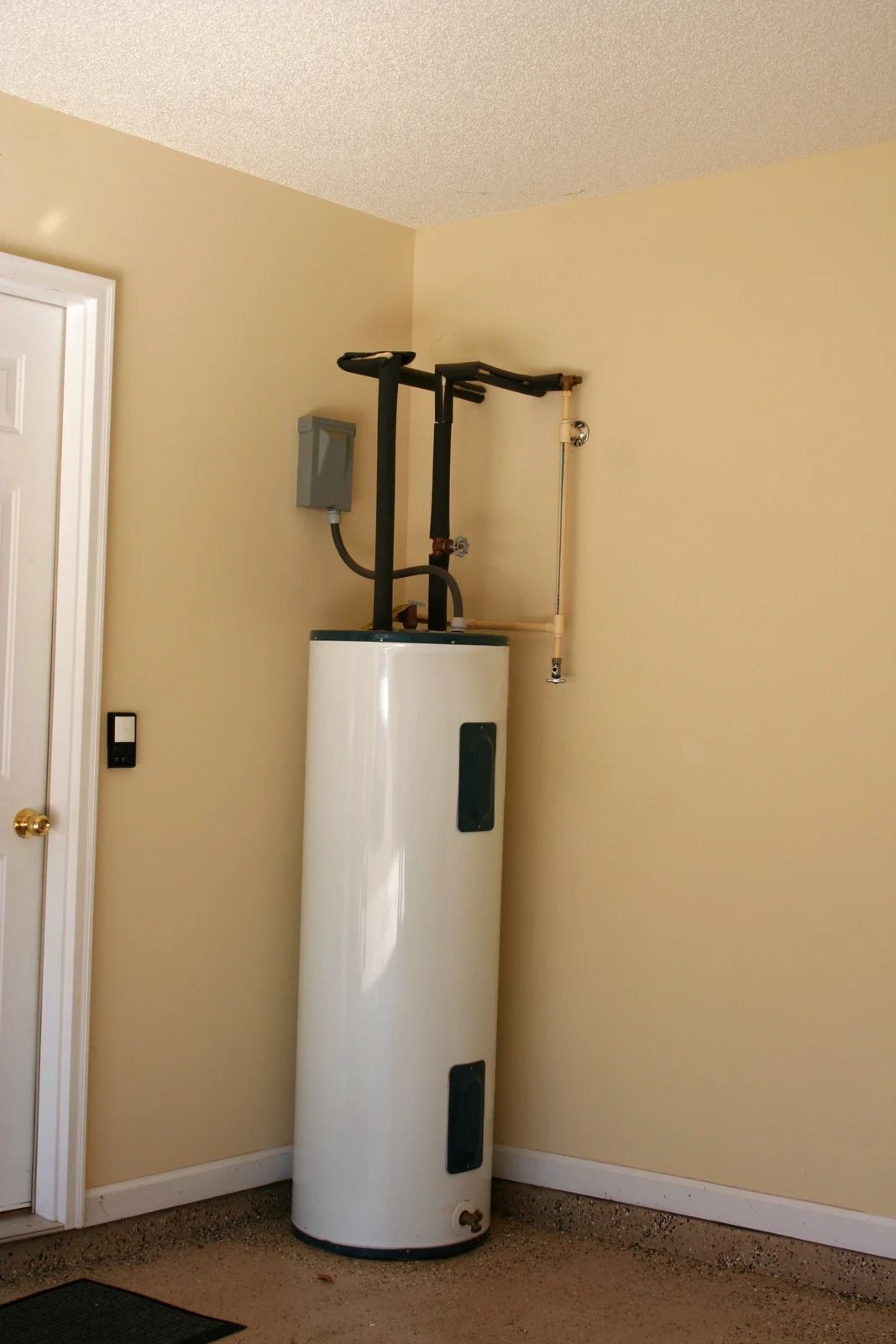
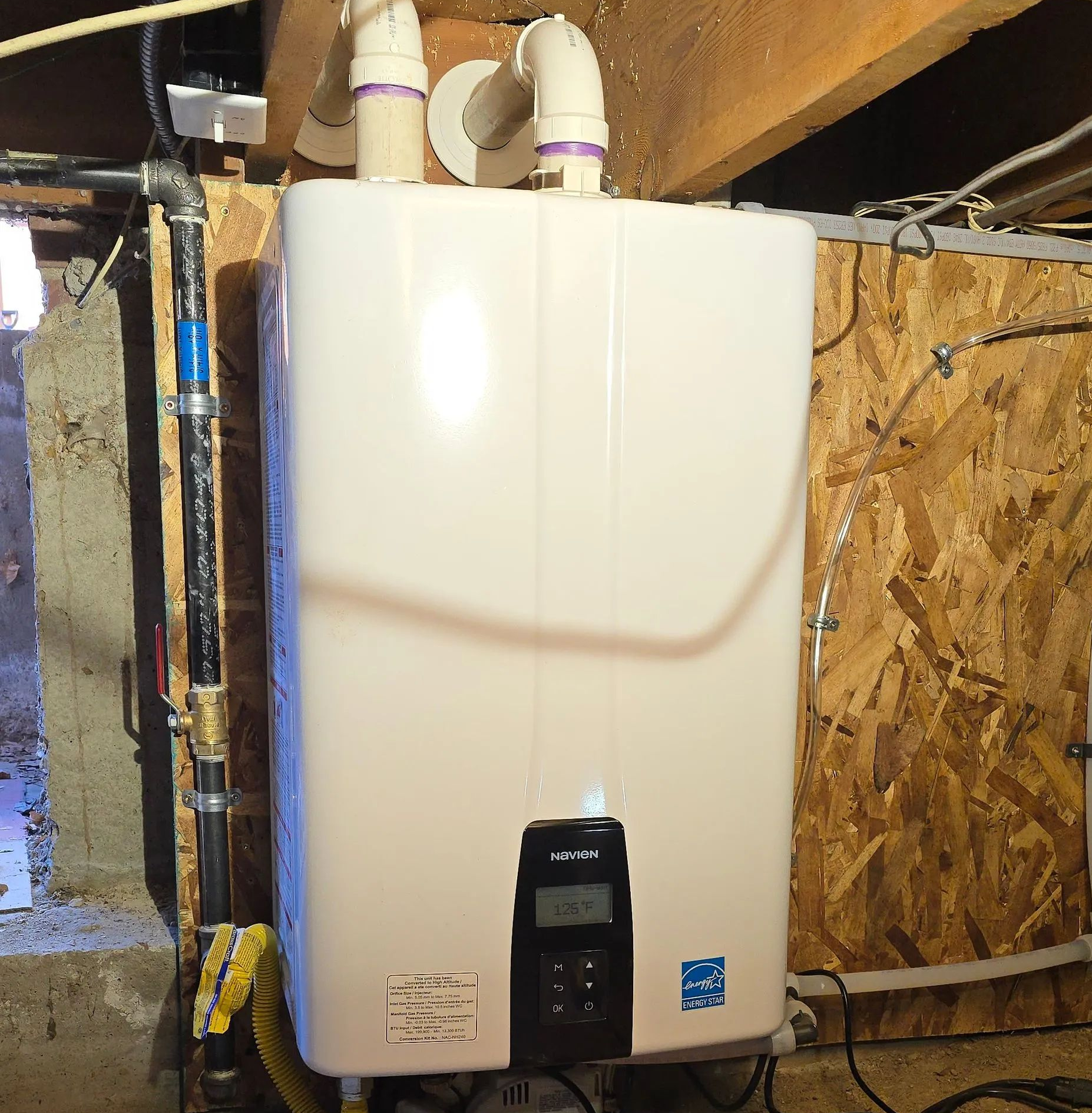
A standard tank typically vents through a simple flue, often shared with other combustion appliances in the home. A tankless unit, especially a condensing model, usually needs different venting, sometimes a separate line routed through an exterior wall and sized to the manufacturer's specifications for that unit's BTU output. In an older home, that can mean modifying existing venting or running new line entirely, which turns a straight tank-for-tank swap into a bigger project.
Space cuts the other way. A tank needs floor space, usually in a utility closet, basement, or garage. A tankless unit mounts on a wall and takes up a fraction of that footprint, which matters where that old water heater closet is doing double duty for storage or laundry equipment. If reclaiming floor space actually matters to your household, that's a legitimate point in the tankless column. Just weigh it against what the venting retrofit really involves in your specific house.
Signs Your Current Setup Is Already Struggling
Sometimes this whole conversation starts not because you're planning ahead but because your water heater is already telling you something's wrong. A tank that's rumbling, taking noticeably longer to recover, or running out of hot water sooner than it used to is usually dealing with sediment that's outpaced its maintenance schedule. That's worth acting on regardless of which technology you eventually choose. A tankless unit throwing error codes, delivering lukewarm water intermittently, or losing flow at multiple fixtures is very often overdue for a heat exchanger descale, especially if it's gone a year or more without one.
Neither symptom set means it's automatically time to switch technologies. Plenty of struggling tanks just need a proper flush and an anode check. Plenty of underperforming tankless units just need the maintenance they were always going to need in this water chemistry, or a hard look at whether the original installation ever accounted for elevation in the first place. Diagnose first. Decide whether to switch technologies after, not before.
Frequently Asked Questions
Does altitude actually make a measurable difference for a home water heater, or is it mostly a concern for RVs and cabins?
It's a real factor for standard household installations, not just RVs or cabins. Gas appliance derating applies at any fixed elevation. Tanks absorb the loss through stored volume, tankless units feel it directly in output capacity.
Can a tank water heater be converted to tankless without major plumbing changes?
Sometimes, but rarely without any changes at all. Gas line sizing, venting requirements, and electrical needs for tankless ignition often differ from a tank setup. A proper assessment checks your gas supply, venting, and electrical access first.
How do I know if my home's water is hard enough to matter for this decision?
Visible mineral spotting on fixtures, chalky residue on shower glass, and reduced soap lather are common signs of hard water. Across this part of the metro, that mineral load is common enough to factor into maintenance planning.
Is a tankless unit more efficient than a tank once altitude and hard water are both factored in?
Tankless systems generally use less energy since they don't keep stored water heated around the clock. That advantage holds at altitude but narrows if maintenance is neglected, since scale reduces efficiency the same way tank sediment does.
Will a water softener eliminate the maintenance difference between tank and tankless?
A softener reduces mineral load reaching either system, slowing both sediment buildup and heat exchanger scaling. It won't eliminate the need for periodic maintenance on either type, but it can stretch the interval between flushes or descales.
How much shorter is a tankless unit's usable capacity at Denver-area elevation compared to its rated spec?
Using the standard derating formula, a unit's rated input drops roughly 4 percent per 1,000 feet above 2,000 feet in elevation. At typical metro elevations, that adds up to a double-digit percentage reduction from the sea-level rating.
If I already have a tank and it's working fine, is there any reason to switch to tankless proactively?
Not usually, if the tank is well maintained and meeting your household's demand. Switching makes more sense when you're already facing a replacement, when demand outgrows recovery capacity, or when reclaiming floor space genuinely matters to you.
Choosing the Right Water Heater for Your Home
Every water heater decision here comes down to the same handful of variables: altitude derating, mineral-heavy water, how your household actually uses hot water, and how much upkeep you're willing to commit to. A tank forgives more mistakes but tops out once demand grows. A tankless unit rewards proper sizing and consistent care but punishes neglect faster. Neither system is inherently better in Colorado. What matters is matching the technology to your home's plumbing, venting, and daily habits.
GK Plumbing
has spent 15
years working on both tank and tankless systems across Northglenn and the surrounding Denver metro, seeing firsthand how elevation and hard water shape which setup actually holds up over time. That experience shapes how a house's plumbing, venting, and hot water habits get read before any recommendation is made. The right system is always the one built around your home's specifics, not a showroom display or a sea-level spec sheet that never accounted for a mile of elevation.